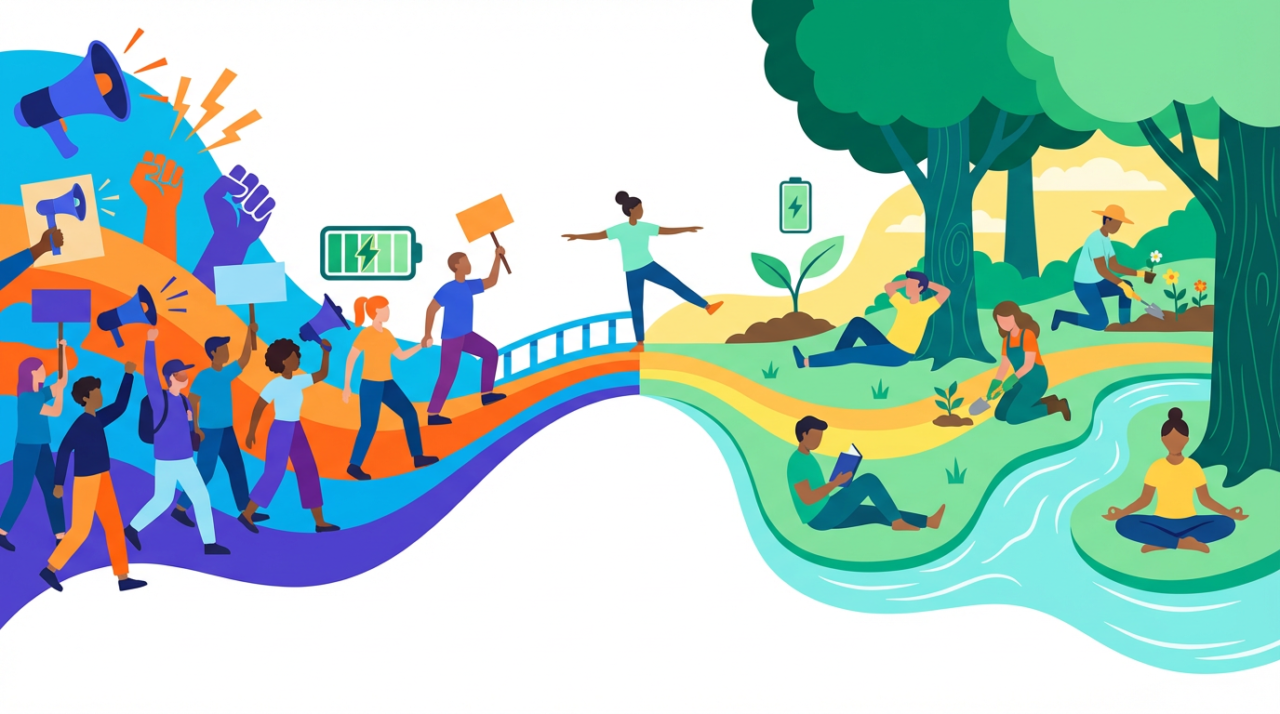
The Burnout Trap Is Built Into How We Think About Change
Political burnout isn’t a personal failing. It’s what happens when advocacy systems are designed for sprints, not marathons. Most political engagement operates on crisis cycles that demand everything from everyone, right now. This creates a mismatch between the urgency of issues and the sustained effort democracy actually needs.
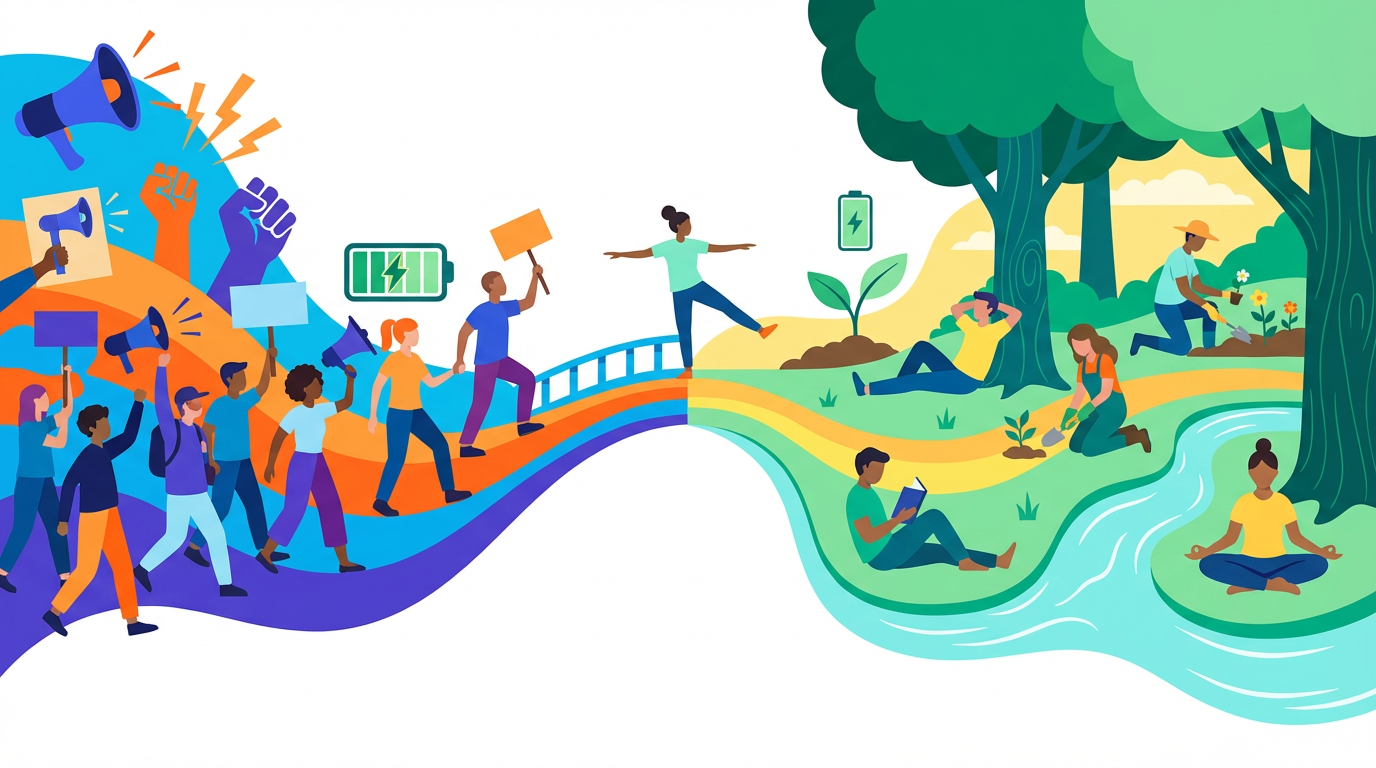
The traditional model asks individuals to carry weight that belongs to systems. You’re supposed to stay informed about every crisis, contact representatives about every bill, and maintain emotional investment in outcomes that are largely beyond your direct control. This treats advocacy like emergency response rather than civic practice.
Real change happens through institutional pressure applied consistently over time. The civil rights movement succeeded not through constant peak intensity, but through organized, sustained campaigns with clear roles and realistic expectations for individual participants.

Sustainable Advocacy Starts With Strategic Focus
Effective advocates choose their battles based on three things: personal capacity, strategic impact, and where they can actually make a difference. You can’t advocate for everything equally without advocating for nothing effectively. This isn’t about caring less, it’s about channeling care more strategically.
Personal capacity means being honest about your time, energy, and skills. Someone working two jobs has different advocacy capacity than someone with flexible hours and disposable income. Both can contribute meaningfully, but their sustainable involvement looks different. The trick is matching your engagement to your actual circumstances, not your ideal ones.
Strategic impact requires understanding which issues are ready for movement and which are stuck in political gridlock. Local housing policy might be more accessible than federal immigration reform. School board elections might offer more leverage than congressional races. Smart advocates follow opportunity, not just passion.
Leverage points are places where small inputs create large outputs. These often exist at local levels where fewer people participate, making individual voices louder. City council meetings, planning commission hearings, and school board elections consistently offer better return on advocacy investment than national campaigns.
Building Systems That Distribute the Load
Sustainable advocacy needs infrastructure that spreads effort across many people and timeframes. Individual heroes burn out. Systems persist. The most effective advocacy organizations work like well-designed machines where no single part carries all the weight.
This means creating clear roles with defined boundaries. Some people research and track legislation. Others focus on relationship building with officials. Still others handle communications or event planning. When everyone tries to do everything, burnout is inevitable. When responsibilities are divided based on skills and capacity, the work becomes manageable.
Effective advocacy systems also build in rotation and rest. Campaign seasons have natural rhythms that smart organizations use to their advantage. High-intensity periods alternate with planning and relationship-building phases. People step back without abandoning the cause, then return refreshed when their energy is most needed.
Information flow matters enormously. Burnout often comes from feeling simultaneously overwhelmed with information and disconnected from impact. Good advocacy organizations create clear channels that deliver relevant information without noise, and regular feedback about how individual contributions add up to collective progress.
The Long Game: Process Over Personalities
Sustainable advocacy focuses on institutional change rather than electoral outcomes. Elections matter, but they’re just one tool for influencing policy. Building long-term power requires working on the underlying systems that shape political decisions: voter registration processes, redistricting rules, campaign finance structures, and civic education programs.
This approach naturally reduces the emotional volatility that drives burnout. When your advocacy focuses on expanding voting access rather than specific candidates, electoral losses feel less devastating. When you’re working to improve local government transparency rather than stopping particular policies, individual setbacks become data points rather than defeats.
Process-focused advocacy also creates more entry points for different types of contributors. Not everyone can or should be a protest organizer, but many people can help with voter registration drives, attend public meetings, or contribute specific professional skills to advocacy organizations.
The long game recognizes that institutional change happens slowly and requires persistent pressure from multiple angles. This perspective helps advocates maintain engagement through inevitable setbacks while building the sustained power needed for meaningful change.
Creating Accountability Without Guilt
Healthy advocacy communities create accountability systems based on collective capacity rather than individual perfectionism. This means regular check-ins focused on what’s working rather than guilt about what people aren’t doing. It means celebrating small wins and learning from setbacks without personalizing failures that belong to systems.
Clear agreements about roles and expectations prevent the mission creep that burns people out. When someone commits to attending monthly city council meetings, that’s their contribution. They shouldn’t feel guilty about not also phone banking for candidates or organizing protests. Defined commitments create permission to say no to other asks.
Regular evaluation helps groups adjust expectations based on actual capacity rather than theoretical ideals. If half the team is overwhelmed, the solution isn’t working harder. It’s redistributing tasks, recruiting more people, or scaling back ambitions to match available resources.
This approach creates space for people to contribute authentically rather than performing activism for social approval. It acknowledges that everyone has seasons of higher and lower political engagement based on work schedules, family responsibilities, health challenges, and personal circumstances.
Building advocacy systems that last requires treating political engagement like the civic practice it is rather than the emergency it feels like. The crises are real, but addressing them effectively requires the patient work of building institutional power through sustainable practices. What changes would make your own advocacy more sustainable? Start there, and build systems that others can join without burning out.