Rigorous political analysis for readers who want to understand the system, not just react to it.

Category: Default

Climate Policy Reality Check: Where the Green Transition Stands in 2024

The Ticking Clock of Climate Action

Climate scientists just gave us a brutal deadline. The Intergovernmental Panel on Climate Change says this decade is make-or-break for keeping global warming from spiraling out of control. Their latest report puts a hard date on it: 2030. That’s when our current path either shifts toward climate stability or we’re stuck with dangerous warming patterns.

This scientific deadline crashes headfirst into political reality around the world. Countries are scrambling to cut carbon emissions fast while trying not to wreck their economies or trigger social chaos. Every major policy fight from Washington to Beijing comes down to this same tension between climate urgency and what’s actually possible.

The world seems to be moving past empty promises, finally. Carbon pricing now covers nearly a quarter of global emissions through different national and regional programs. But it’s still nowhere near enough for the massive changes we need.

Industrial Policy Reshapes the Green Economy

Governments are throwing money at clean energy like never before. The U.S. put hundreds of billions into the Inflation Reduction Act. EU countries are coordinating huge renewable energy investments through their Green Deal. China keeps dominating solar panel and battery manufacturing by directing massive amounts of state capital.

This is a complete flip in how we think about economics. Free-market thinking gets pushed aside as nations fight for green technology dominance. The Climate Policy Initiative tracks these investment flows, showing how public money increasingly drives private sector changes.

Now we’re seeing trade fights as countries protect their domestic clean energy industries. Subsidy wars have replaced the old era of climate cooperation. National security concerns are getting tangled up with environmental goals, creating messy geopolitical dynamics around supply chains and tech dependencies.

The Justice Problem in Climate Transition

Communities built around fossil fuel industries are staring at an uncertain future as energy systems change. Coal mining towns, oil refinery areas, and natural gas extraction regions face economic extinction without clear alternatives. Political pushback against climate policies often comes from these displaced communities, not abstract ideological opposition.

Just transition programs try to fix these problems through job retraining, economic development help, and social safety nets. But making it work across different local situations is tough. Rural areas struggle to attract clean energy investments while cities grab most of the green economy benefits.

Job losses go way beyond traditional energy sectors. Auto manufacturing, shipping, and heavy industry all need complete overhauls. Labor unions increasingly want concrete job guarantees rather than fuzzy promises about future green employment.

Global Climate Finance Remains Inadequate

International climate talks at COP27 reached a breakthrough agreement on loss and damage payments for vulnerable developing nations. This fund admits that some climate impacts can’t be prevented or adapted to, requiring direct financial help for affected people.

The initial funding commitments are nowhere near what’s needed. Carbon Brief climate analysis shows that small island states and least developed countries need hundreds of billions annually for climate resilience and recovery. Current pledges cover only a tiny fraction of these needs.

Rich nations don’t want to accept liability for historical emissions while developing countries refuse responsibility for problems they didn’t create. This basic disagreement over climate justice undermines cooperation on both cutting emissions and adaptation planning.

Corporate Climate Commitments Under Investigation

Net-zero promises from major corporations are everywhere now, but independent analysis shows huge gaps between what companies say and what they actually do. Many rely heavily on buying carbon offsets rather than cutting emissions from their own operations and supply chains.

Regulators are cracking down as investors and consumers demand transparency about corporate climate strategies. Greenwashing accusations target firms that focus on marketing over measurable environmental improvements. Financial regulators are developing new disclosure requirements to standardize climate risk reporting.

Some corporations are genuinely transforming by putting substantial capital toward clean technologies. Others keep doing business as usual while running sophisticated PR campaigns about sustainability commitments. Telling real change from performance art requires digging into actual investment patterns and operational changes.

These fights over corporate accountability reflect bigger questions about whether market forces or regulatory mandates will drive decarbonization. Evidence from early adopters gives us valuable data about which approaches deliver real results rather than just superficial compliance.


The Gilded Age Redux: How Modern Inequality Echoes America’s Past Crisis

When Wealth Concentrates: Lessons from 1890 and 2024

The numbers tell a familiar story. In most developed nations today, the wealthiest one percent controls more assets than the bottom sixty percent combined. This concentration of wealth mirrors the economic situation of the original Gilded Age, when industrial barons accumulated fortunes that dwarfed entire state budgets. The parallel is striking, yet the mechanisms driving inequality today work through completely different channels.

The Gilded Age Redux: How Modern Inequality Echoes America's Past Crisis
The Gilded Age Redux: How Modern Inequality Echoes America’s Past Crisis

Mark Twain coined the term “Gilded Age” to describe the glittering surface that masked deep social problems beneath. Today’s inequality crisis shares that deceptive shine. Stock markets hit record highs while working families struggle with housing costs that eat up huge chunks of their income. The Inequality.org data shows patterns that would have looked familiar to reformers of the 1890s. Still, the policy tools available today create different possibilities for fighting back.

Historical context matters because it shapes our understanding of what actually works. The progressive reforms that came out of the first Gilded Age included antitrust legislation, labor protections, and eventually the graduated income tax. These measures didn’t eliminate inequality, but they created frameworks for broader prosperity. The question facing policymakers today is whether similar institutional changes can address wealth concentration when capital flows globally and digital platforms dominate commerce.

Housing: The New Frontier of Economic Division

Housing costs across English-speaking nations have reached levels not seen in four decades relative to median incomes. This is a fundamental shift in how families build wealth and plan for the future. Unlike previous eras when housing was a reliable path to middle-class stability, today’s market increasingly divides society into property owners and permanent renters.

The Gilded Age saw similar housing pressures in rapidly industrializing cities. Tenement conditions in New York and Chicago sparked reformist movements that eventually produced building codes and public health regulations. Today’s housing crisis operates at a different scale. It spans entire metropolitan regions and crosses national borders as global investment flows chase real estate returns.

Policy responses vary wildly across jurisdictions. Some cities experiment with inclusionary zoning, others with rent stabilization measures. The challenge is balancing housing supply with affordability goals while recognizing that housing markets now function as global asset classes rather than purely local amenities. It’s a mess, frankly.

The Gig Economy: Industrial Relations in Digital Form

Employment relationships in the digital economy echo debates from the early industrial period about worker classification and protection. Across Europe, the United Kingdom, California, and Australia, regulators struggle with whether app-based workers should receive traditional employee benefits or operate as independent contractors.

The historical parallel runs deeper than surface similarities. The original Gilded Age saw fierce battles over industrial working conditions that eventually produced labor laws still in effect today. Modern gig work presents similar questions about economic security and worker power, but within technological frameworks that didn’t exist during earlier reform periods.

Different jurisdictions are testing different approaches. Some emphasize portable benefits that follow workers across platforms. Others focus on collective bargaining rights adapted to digital labor markets. The outcomes of these experiments will likely influence employment law for decades, much as industrial-era reforms shaped twentieth-century labor relations. We’re essentially making it up as we go along.

Wealth Taxes and Universal Income: Old Ideas in New Forms

France and Spain are moving forward with wealth tax proposals while several American states consider similar measures. These policies echo progressive-era taxation debates but operate when assets can move across borders more easily than during the original progressive era. The challenge is designing effective wealth taxes when capital is so mobile.

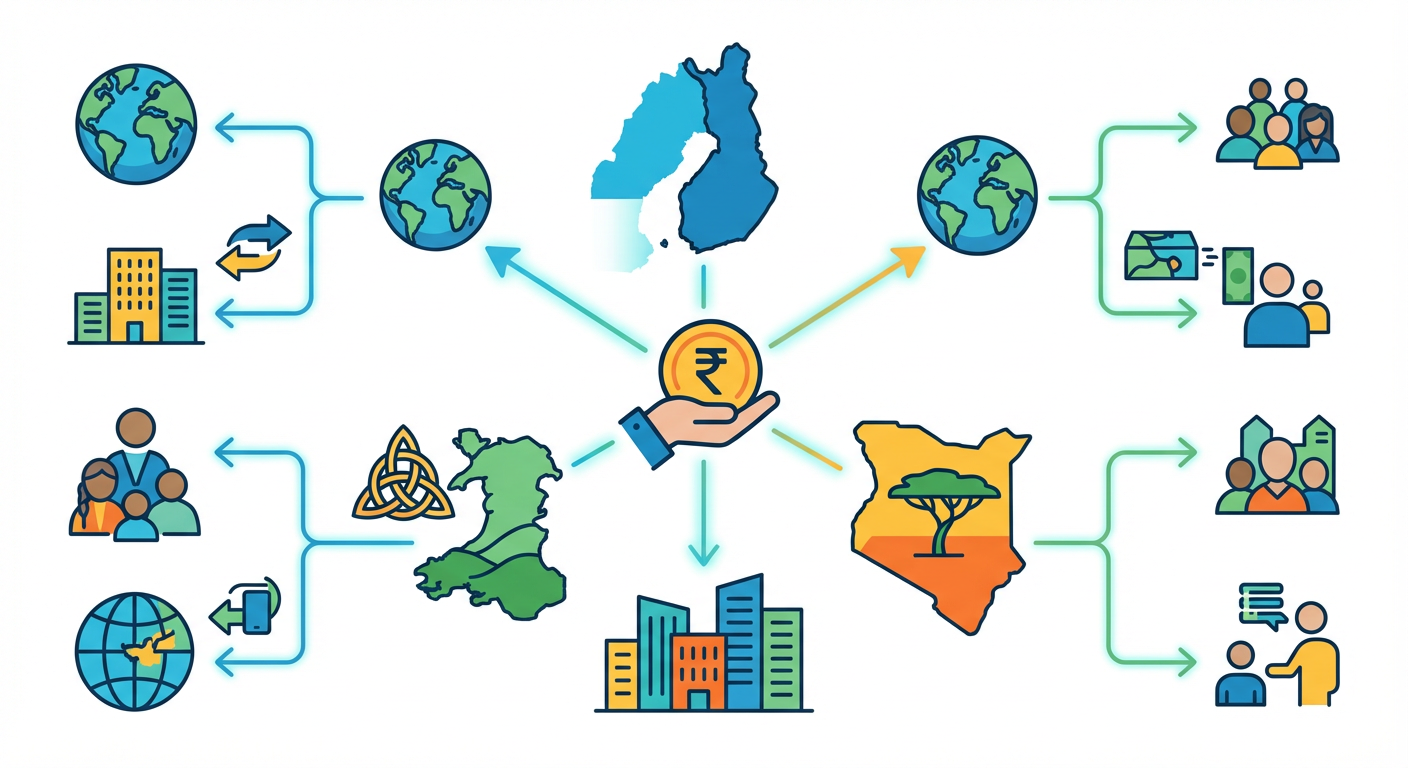
Universal Basic Income programs are expanding following encouraging results from pilots in Finland, Wales, and Kenya. The concept itself isn’t new. Similar ideas circulated during the Great Depression and gained attention during the 1960s. What’s different now is the technological capacity to implement such programs efficiently and the growing recognition that traditional safety nets may be inadequate for modern labor markets.

The Brookings Institution research suggests these policy experiments represent genuine innovation rather than mere revival of past approaches. The combination of digital administration, global economic integration, and changing work patterns creates possibilities that weren’t available to earlier reformers.

Intergenerational Transmission: The Persistence of Advantage

Perhaps the most troubling parallel with the Gilded Age involves the growing importance of family wealth in determining life outcomes. When inherited advantages become the primary driver of economic success, societies risk creating hereditary class structures that democratic institutions struggle to address.

The mechanisms of advantage transmission have evolved significantly. Where Gilded Age elites passed on industrial enterprises and real estate, today’s wealthy transfer financial portfolios, educational opportunities, and social networks. The scale may be different, but the fundamental dynamic of concentrated advantage persists across generations.

Policy responses to inherited inequality range from estate tax reforms to educational finance changes. Some proposals focus on wealth-building opportunities for younger generations. Others emphasize breaking down barriers that prevent social mobility. The challenge is designing interventions that can meaningfully alter intergenerational transmission patterns without undermining legitimate family support.

Understanding these historical parallels doesn’t provide simple policy prescriptions, but it does offer perspective on the scope and persistence of inequality challenges. The reformist movements that emerged from the original Gilded Age required decades to achieve meaningful change. Today’s inequality crisis may demand similar patience and persistence, combined with policy innovation suited to contemporary economic realities. The conversation about effective responses is just beginning. The stakes for democratic governance remain as high as they were more than a century ago.

The Wealth Concentration Crisis: How Policy Makers Are Fighting Back Against Systemic Inequality

The Scale of Modern Wealth Concentration

Economic inequality has hit levels we haven’t seen since the Gilded Age. In most developed OECD countries, the wealthiest one percent now controls more resources than the bottom sixty percent combined. That’s a massive shift in how prosperity gets distributed.

It goes way beyond income gaps. Asset ownership, investment returns, and capital appreciation create these self-reinforcing cycles where the wealthy just keep getting wealthier. Meanwhile, middle and working-class families watch their wages stagnate while everything from groceries to gas costs more. Housing alone now eats up bigger chunks of household budgets than we’ve seen in four decades across English-speaking countries.

This isn’t some temporary market hiccup. These are structural changes in how our economies work. Inequality.org data shows the same patterns everywhere you look: executive pay ratios, inheritance concentration, you name it. We’re not just talking about individual financial stress here. This stuff threatens democratic governance and tears at social cohesion.

Wealth Tax Experiments Gain Momentum

Governments are finally getting bold about targeting concentrated wealth directly. France has rolled out new measures for high-net-worth individuals. Spain introduced wealth taxes specifically aimed at their richest citizens. Several American states are pushing similar legislation because they’ve figured out that traditional income taxes completely miss asset-based wealth accumulation.

But these initiatives face real implementation headaches. Try putting a value on illiquid assets, privately held companies, and capital that can hop borders overnight. Tax avoidance strategies have gotten scary sophisticated, so enforcement has to keep up. Still, the political momentum behind wealth taxation keeps building as traditional revenue sources fall short of what we need for public services.

The EU’s coordination efforts on wealth taxation are particularly interesting to watch. By getting member states on the same page, they’re trying to stop the tax competition and capital flight that have historically killed individual national efforts. If they pull this off, it could become a template for broader international cooperation on wealth taxation.

Universal Basic Income Moves Beyond Theory

Universal Basic Income programs are expanding fast after promising results from early studies in Finland, Wales, and Kenya. These pilots showed real improvements in health outcomes, educational attainment, and entrepreneurial activity among recipients. More importantly, they blew up a lot of assumptions about work motivation and social dependency that have dominated policy debates for decades.

COVID accelerated interest in UBI big time. Governments deployed emergency cash transfer programs on unprecedented scales, giving us real-world data on administrative feasibility and economic impacts. Brookings Institution research suggests direct cash transfers can actually be more efficient than means-tested welfare programs in many situations.

Implementation remains politically messy despite growing evidence. Funding mechanisms, benefit levels, and how UBI interacts with existing social programs need careful calibration. Some proposals want to replace current welfare systems entirely. Others see UBI as a supplement to existing safety nets. The choice between these approaches has huge implications for both fiscal sustainability and political viability.

Housing Crisis and Regulatory Battles

Housing affordability has become the inequality issue across developed economies. Decades of supply constraints, turning residential property into investment vehicles, and loose monetary policy have pushed homeownership out of reach for growing segments of the population. Rental markets offer little relief as investors compete with would-be homeowners for limited housing stock.

At the same time, gig economy employment has scrambled traditional employer-employee relationships. Regulatory battles are heating up across the EU, UK, California, and Australia as governments try to figure out how to classify platform workers and who’s responsible for benefits and protections. These decisions will shape how millions of workers access healthcare, retirement savings, and unemployment insurance.

The combination of housing costs and employment instability hits younger generations especially hard. Traditional paths to wealth building through homeownership have narrowed just when employment has become less secure and predictable. This threatens to lock in inequality across generational lines in ways our previous policy frameworks weren’t designed to handle.

Intergenerational Wealth Transfer and Future Policy

Maybe the most troubling long-term trend is how inherited wealth increasingly determines life outcomes. Family financial resources now predict educational opportunities, career prospects, and eventual wealth accumulation more than individual effort or talent. That’s a direct challenge to the meritocratic ideals that democratic societies claim to uphold.

Estate tax policy becomes critical here, yet most countries have actually weakened inheritance taxes over recent decades. The political difficulty of taxing transfers between family members has allowed wealth concentration to compound across generations. Some policy makers now push for more aggressive intervention in intergenerational transfers, including broader estate taxes and using inheritance-based funding for universal programs.

This challenge requires coordinated responses across multiple policy areas. Tax reform alone won’t address structural inequality without complementary changes to education funding, housing policy, labor regulation, and social insurance programs. Success demands sustained political commitment over decades, not just individual legislative wins.

These inequality trends represent one of the defining political challenges of our time. The policy responses emerging now will shape economic systems for generations. Understanding these dynamics and their implications is essential for anyone who wants to engage meaningfully with contemporary political debates.

The Architecture of Inequality: How Policy Design Shapes Economic Outcomes

The Concentration Problem

The numbers tell a stark story. Across developed nations, the wealthiest one percent now controls more assets than the bottom sixty percent combined. This isn’t an accident of individual choices or market forces alone. It’s what happens when you build a system over decades that consistently favors those who already have money.

Wealth concentration at the top happens because of systematic advantages baked into tax codes, inheritance laws, and financial regulations. When capital gains get better treatment than wages, when estate planning lets vast fortunes skip from generation to generation untouched, when financial institutions capture their own regulators, the outcome becomes mathematically certain. Wealth compounds way faster than wages grow.

This structural reality needs structural solutions. All the individual responsibility talk misses the point completely when the game board itself tilts toward predetermined winners. Inequality.org data shows how policy choices, not personal failings, drive these disparities across different countries.

Wealth Taxation Renaissance

Progressive taxation is making a comeback worldwide as governments deal with budget pressures and social unrest. France brought back wealth taxes after briefly ditching them. Spain introduced new levies on high-net-worth individuals. Several American states are designing their own wealth tax proposals, knowing that federal action remains politically stuck.

The technical challenges are real. Wealth is harder to measure than income. Asset valuations jump around. Cross-border mobility complicates enforcement. But these implementation headaches don’t kill the basic logic. When wealth concentrates faster than the economy grows, taxation becomes a necessary circuit breaker.

Early results from European experiments suggest that well-designed wealth taxes can generate real revenue without triggering massive capital flight. The trick is coordinated international frameworks that prevent regulatory arbitrage. Go it alone and money runs away. Work together and the calculation changes completely.

Housing as the New Dividing Line

Housing costs now eat record shares of household income across English-speaking nations. This isn’t a temporary market hiccup. It’s what you get when policies treat housing as an investment commodity rather than basic infrastructure people need.

Zoning restrictions choke off supply in places people actually want to live. Tax incentives favor homeowners over renters. Foreign investment flows push prices beyond what local wages can handle. You end up with a housing ladder that fewer people can climb, creating a permanent renter class locked out of building wealth.

Generational wealth transfer now determines who gets to own housing. Young adults increasingly need family money for down payments. Those without inherited advantages face a brutal choice: permanent rental status or geographic exile to affordable regions with limited job prospects.

Policy responses need coordinated action across multiple areas. Supply-side reforms must tackle regulatory barriers to construction. Demand-side interventions could include speculation taxes and foreign buyer restrictions. Public housing programs need massive reinvestment to provide real alternatives to private markets.

The Gig Economy Battleground

Labor classification fights across multiple countries reveal deeper tensions about economic security in platform capitalism. California’s AB5 legislation tries to reclassify independent contractors as employees. European Union directives push for stronger worker protections. Australia debates similar measures while the UK refines its worker status categories.

These regulatory battles aren’t really about ride-sharing or food delivery. They’re about whether the social safety net can adapt to work relationships that blur traditional boundaries. When workers lack employer benefits, healthcare, or retirement contributions, taxpayers end up covering costs that private companies dump on everyone else.

The policy challenge goes beyond classification schemes. Universal basic income pilots in Finland, Wales, and Kenya explore whether guaranteed income can provide security regardless of employment status. Early results suggest UBI can cut administrative overhead while maintaining work incentives, but questions about funding and political sustainability remain wide open.

Technology platforms operate across borders while labor regulations stay national. This mismatch lets companies shop around for favorable rules while workers get trapped within specific legal frameworks. International coordination on labor standards becomes essential to prevent a race to the bottom.

Structural Solutions for Structural Problems

Economic inequality reflects policy choices embedded in how institutions work. Tax structures that favor capital over labor. Monetary policies that inflate asset prices faster than wages. Educational systems that reproduce class advantages across generations. Housing markets that treat shelter as speculation.

Real reform requires coordination across multiple policy areas. Wealth taxes without inheritance reform let generational advantages continue. Labor protections without housing affordability leave workers vulnerable to cost inflation. Universal basic income without progressive taxation creates impossible budget math.

Brookings Institution research shows how successful inequality reduction depends on comprehensive policy packages rather than isolated interventions. Countries that have maintained relatively equal income distributions typically combine strong labor protections, progressive taxation, robust public services, and active industrial policies.

These structural challenges need sustained political commitment that outlasts electoral cycles. Building institutional capacity for long-term inequality reduction requires broad coalitions that can survive inevitable pushback from entrenched interests. The policy tools exist. Political will remains the bottleneck.

Ukrfoto — Policy Without the Noise

Sticky post

Ukrfoto — Policy Without the Noise

Rigorous political analysis for readers who want to understand the system, not just react to it.

Political coverage has a problem: it’s designed for outrage. We do the opposite. Every piece we publish starts with primary sources, policy documents, and expert analysis. We cover power, how it works, and why it matters to you.

Topics we cover: Domestic Policy · Foreign Affairs · Elections · Economics · Law & Courts · History

The Real Picture on Economic inequality and policy responses

This is one of those moments where paying attention changes what you do next. The topic of economic inequality and policy responses deserves more careful attention than the typical coverage provides, and the reason is not complicated once you know where to look.

The part of this that most people miss is also the part that matters most: wealth tax proposals are gaining real traction in France, Spain, and several US states. When you examine what the evidence actually shows, the situation becomes clearer and more concrete.

The Real Picture on Economic inequality and policy responses

The Review: Setting the Terms

The top 1 percent holds more wealth than the bottom 60 percent combined in most OECD countries. This isn’t just another data point, it’s the structural condition that makes everything else in this analysis make sense. Context like this doesn’t age quickly. The conditions that produced it have been building for years, and this convergence is what makes the current moment different from previous moments that looked similar from a distance.

Wealth tax proposals are gaining traction in France, Spain, and several US states.

UBI pilot programs are expanding following studies in Finland, Wales, and Kenya. Inequality.org data has been tracking this consistently.

What makes this moment worth examining carefully isn’t the novelty but the confirmation. The underlying dynamics have been visible for some time. What’s new is that they’ve reached a threshold where ignoring them requires active effort rather than simple inattention. That threshold crossing is the real event, not the underlying movement that produced it.

And housing costs as a share of income are at a 40-year high across English-speaking countries. This is part of that same picture. These elements don’t exist in separate silos, they’re reinforcing conditions in the same structural shift.

Illustration for The Real Picture on Economic inequality and policy responses

The Evidence Brief: The Analysis

Housing costs as a share of income at a 40-year high across English-speaking countries is where the analysis gets more specific. The surface reading is accessible and not wrong, but it misses the mechanism. And the mechanism is where the practical insight lives. The part of this that most people miss is also the part that matters most: the mechanism is gig economy regulation battles happening right now across the EU, UK, California, and Australia. Understanding this changes what you do with the information.

Wealth transfer between generations is becoming the dominant factor in life outcomes.

The skeptical counterargument deserves honest engagement: previous moments with similar surface characteristics didn’t produce the outcomes that seemed logical at the time. That history is real. What’s different now is that wealth transfer between generations is becoming the dominant factor in life outcomes. This isn’t a minor variable, it’s the infrastructure condition that previous cycles lacked. Infrastructure changes tend to stick around in ways that sentiment-driven changes don’t. Brookings Institution is one source tracking this with the rigor it requires.

There’s also a distributional question that often goes unaddressed in coverage of economic inequality and policy responses: who captures the value created by these shifts, and who absorbs the disruption costs? The aggregate picture can be positive while the distribution is uneven in ways that matter enormously to specific participants. Keeping that distributional lens in view is part of reading the situation clearly rather than simply optimistically.

Implications: What This Means If You Care About Policy claims

The implications of economic inequality and policy responses extend beyond the immediate context. The top 1 percent holding more wealth than the bottom 60 percent combined in most OECD countries, combined with the structural conditions described above, creates a situation where adjacent fields, decisions, and communities are affected in ways that aren’t always visible from inside the primary story. The second-order effects are frequently more important than the first-order ones, and they’re where careful attention pays the highest returns.

Civic energy with intellectual backbone.

The practical question isn’t whether to engage with these dynamics but how. The answer depends on context, on what role you occupy relative to economic inequality and policy responses and what your actual decision horizon is. But the first step is the same regardless: accurate understanding of what’s actually happening rather than what the most available narrative says is happening.

A few concrete observations are worth separating out from the broader analysis. First: wealth tax proposals gaining traction in France, Spain, and several US states isn’t a temporary condition, it’s a new baseline. Second: gig economy regulation battles ongoing across the EU, UK, California, and Australia suggest that the adjustment period isn’t over. Third, and most important: the organizations and individuals who are treating the current moment as a new steady state rather than a transition are making a categorization error that will be costly to unwind later.

The Case Against: What the Critics Get Right

Intellectual honesty requires acknowledging the strongest counterarguments, not just the weakest ones. The case against the optimistic reading of economic inequality and policy responses isn’t trivial. There are structural vulnerabilities in the current picture that deserve direct engagement rather than dismissal.

The most serious objection is the one about sustainability. UBI pilot programs expanding following Finland, Wales, and Kenya studies can be read not as a foundation but as a ceiling, a point beyond which growth becomes self-limiting because of the very dynamics that produced it. If the current state has already incorporated most of the available supply of early-adopting participants, the remaining growth curve may be structurally shallower than the recent trajectory implies.

Wealth transfer between generations becoming the dominant factor in life outcomes.

Looking Forward

The trajectory here is clearer than the pace. Making predictions about when specific thresholds will be crossed is genuinely difficult, and anyone claiming precision about timelines should be treated with skepticism. But the direction, toward the top 1 percent holding more wealth than the bottom… and continued development of the conditions described above, is supported by the evidence in a way that doesn’t depend on a single variable going right.

Wealth transfer between generations becoming the dominant factor in life outcomes is the variable to watch as the leading indicator. Historical patterns suggest it moves first, with broader metrics following with some lag. This doesn’t make the outcome certain, but it makes it readable, and readability is what you need for good decisions.

Three questions are worth holding as the story develops. First: are the structural conditions that enabled the current state durable, or are they cyclical? Second: who is positioned to benefit from the next phase, and does that differ materially from who benefited in the current phase? Third: what would a clean falsification of the optimistic thesis look like, and is there any evidence of that signal emerging? These questions don’t need answers today, but having asked them changes what you notice in the months ahead.

The action from here is straightforward, even when the situation isn’t.

Find an error or a missing source? Point it out, accuracy matters more than being right.

pxwnjkzzaa

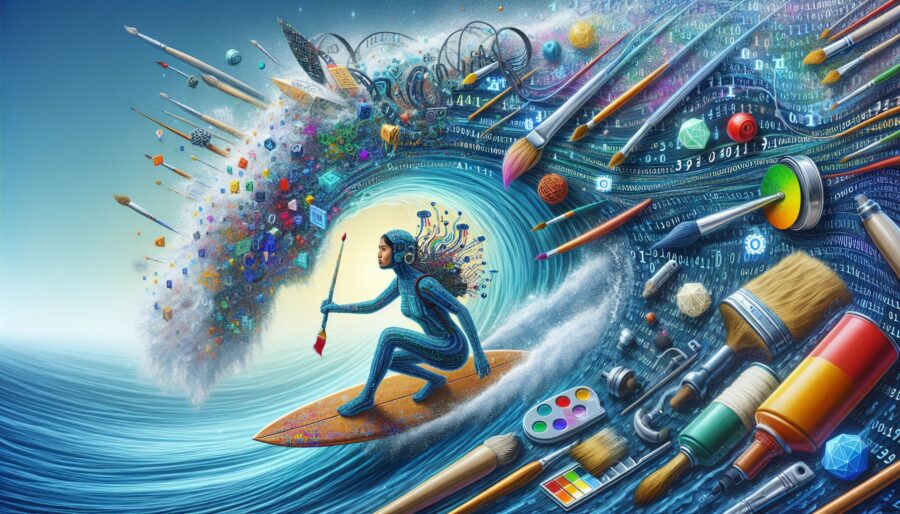
Riding The AI Art Wave: Where Creativity Meets Code

Hey tech enthusiasts! Today, we’re diving deep into the mesmerizing world of Artificial Intelligence in creative arts. Let’s face it—AI is doing some pretty jaw-dropping stuff these days, but when it comes to art, it’s like handing a futuristic paintbrush to Picasso meets Tesla, the car—not the person. So, grab that cyber-coffee (if that’s a thing) and let’s explore how AI is reshaping the creative frontier, one pixel at a time.

From Code to Canvas: The Birth of AI Art

Remember when computers were just those big clunky machines chugging along to help with math problems? Well, it turns out they’ve picked up a few more tricks since then. AI in art is honestly kind of wild when you think about it. Technology and creativity are mixing together in ways nobody really expected.

A Brief Trip Down Memory Lane

First, let’s take a quick trip down AI Art memory lane. Back in the day (and by “day,” I mean a couple of decades ago), computers could barely string together a coherent sentence. Fast forward, and now we have algorithms like DALL-E, from OpenAI, generating visuals at the drop of a hat, or more accurately, at the drop of a prompt.

It all began with early neural networks trying to mimic human artwork. Think a robot wielding a paintbrush at a toddler level. Of course, just like humans, AI programs got better with practice. Fast forward to today, and these algorithms no longer just copy human art. They create their own weird, distinct, often surreal works. And the best part? Artists worldwide are using these tools to help with their creative process. Who would’ve thought your next favorite artist might actually be a machine?

The New Tools of The Trade

So, how does this magical blend of technology and art actually happen? Let’s take a peek under the algorithmic hood to see some tools that are fundamentally changing how creative arts work.

GANs: The Power Behind The Paintbrush

Generative Adversarial Networks, or GANs for the insiders, have become a major driving force behind AI-generated art. These clever little algorithms pit two neural networks against each other, a kind of creative rivalry, to generate some truly impressive pieces. Picture a scenario where two AI bots are hell-bent on one-upping each other on canvas. The result? Art that can have even the dullest party staring at its pixels, mouths agape.

The Influence of NLP

Natural Language Processing isn’t just for chatbots anymore. No, sir! Artists use NLP tools to create complex storylines or even poetic verses that accompany the visuals. Imagine explaining to an algorithm what you want, a landscape that speaks of wanderlust and mysterious islands, and having it draft a visual and narrative that could rival the opening scene of the next blockbuster movie.

Accessibility for All

What’s particularly thrilling is how accessible these tools have become. Platforms like DeepArt or RunwayML allow everyday creators without a Ph.D. in Computer Science to explore their creativity using AI. It’s almost like we’ve all been given a VIP pass to the future of art, and trust me, the possibilities are mind-blowing.

The Big Picture: Opportunities and Challenges

Alright, while the notion of robot Picassos might sound all glow and glory, let’s keep it real. This AI artistry wave brings its own set of opportunities and challenges.

A New Era for Artists

In what could be considered a techno-utopian twist, artists now have access to tools that were once tucked away in the back-rooms of high-tech labs. This offers a unique opportunity for collaboration between humans and machines. Imagine an artist and AI co-creating, each bringing a unique set of tools, perceptions, and creativity to the table.

These tools can help streamline workflows and offer new, innovative ways to express ideas. Need an instant brainstorm partner? How about that AI algorithm that can generate hundreds of visual variations in seconds? Talk about hitting the creative jackpot!

Navigating the Ethical Maze

But let’s address the elephant, or rather, the algorithm, in the room. With the rise of AI-generated art, copyright and plagiarism concerns abound. Who owns a piece of art the moment AI finishes it? Is it the programmer behind the code, the artist who prompts it, or the AI entity itself? This is a question that currently resides in a grey area murkier than a foggy day in Silicon Valley.

There’s also the worry about diminishing the value of human artistry. If an AI can whip out a masterpiece in the time it takes us to grab a cup of coffee, are we commoditizing creativity? It’s a philosophical conundrum that is both mind-bending and exciting.

Sparking A Dialogue

These challenges aside, one thing’s for sure: AI is sparking conversations across artistic communities globally. Whether it’s the traditional artists skeptical of tech encroaching on their space or digital artists celebrating new mediums, dialogue is key. After all, change is the only constant, and it’s when we swap stories and share diverse perspectives that real evolution occurs.

A Glimpse Into The Future

So, what lies ahead for AI in the creative arts space? If I had a crystal ball, or maybe just a really advanced AI, I’d say the future is promising, albeit unpredictable. With advancements in both AI and artistic methodologies, it’s only a matter of time before we witness something so revolutionary that it’ll redefine art as we know it.

Speculating on New Horizons

Imagine an interactive installation where AI responds to your emotional cues and adjusts the art in real-time. Or perhaps AI-designed fashion that predicts trends before humans even come close. We’re venturing into an era where our wildest creative dreams could very well become our lived realities.

Wrapping it Up

As we stand here on the brink of this artistic evolution, it’s impossible not to feel a surge of excitement about where we’re headed. AI isn’t just a tool, it’s a partner in creativity’s future. It’s waving its digital wand, ready to shape a canvas where creativity isn’t limited by skill but is potential for anyone who dares to dream.

What do you think about AI’s foray into the creative world? Are you imagining an algorithmide with your favorite creative tool? Or does the idea make your art purist heart skip a beat (in the wrong way)? Let’s keep the conversation going, because the future of creativity is here, and it’s digital, dynamic, and darn exciting.

xxxcizoujy

Artificial Intelligence: The Creative Maestro of the 21st Century

Hey tech enthusiasts, fellow futurists, and anyone looking for a little spark of inspiration from the world of artificial intelligence! Today, I’m diving into one of the most exciting avenues within AI—the role of artificial intelligence in the creative arts. This isn’t about some far-off dystopian future where robots have taken over our easels and microphones, but rather about the genuinely incredible stuff happening right now. Plus, I’ll throw in a few personal insights and maybe a joke or two, because why not keep it light?

A World Where Algorithms Paint Masterpieces

Okay, picture this: a computer program not only analyzing but understanding art. It sounds a bit out there, right? However, companies like DeepArt and OpenAI with their DALL-E project are doing just that. These technologies use deep learning to create visual art from simple text prompts. It’s like giving a computer a canvas and saying, “Go wild!” And let’s be honest, their “wild” is pretty mind-blowing.

Machines with a Vision

Once, I watched a virtual gallery showing pieces generated by AI. Honestly, it felt a bit like conversing with a peculiar but brilliant artist. Each piece had its own vibe. A landscape with Van Gogh-like swirls next to geometric abstractions worthy of Kandinsky. It makes you wonder, are these neural networks channeling old masters or creating something entirely new? More importantly, does it matter? At the end of the day, art should evoke emotion, and if an algorithm achieves this, who am I to scoff?

Music Masters from the Machine World

Now, let’s jump into the world of music. AI-driven music makers like Jukedeck and AIVA (Artificial Intelligence Virtual Artist) are composing tunes that range from hauntingly beautiful to peppy pop beats that’ll have you tapping your feet. Imagine this: a digital companion capable of crafting just the right mood for your next personal video project or even a full-blown film score.

Playing a Supporting Role

Before anyone panics at the thought of AI replacing human musicians, let’s dial it back a bit. The beauty here is in collaboration. As an avid music lover (I may have sung a few too many times in the shower), I’ve dabbled with some AI-driven composition tools. And you know what? They aren’t stealing anything away from human creators. Instead, they’re becoming essential tools that offer new ways to express creativity. These algorithms don’t sleep, don’t tire, and they’re relentless in experimenting. This leaves the human artist to do what they do best: innovate and inspire.

The Written Word in a World of Algorithms

Let’s talk literature. One of the most common fears or maybe fascinations is the idea of AI-generated writings. Could a machine write the next great American novel? The short answer is “not yet,” but there’s more to it than that. Tools like OpenAI’s GPT models (okay, hands up, I’m a bit biased) are already helping with the creation of poetry, short stories, and even full-length books, but with a catch. They work best as co-writers.

A Digital Pen Pal

In my experience, playing with these language tools is like having a sparring partner that throws you sometimes bizarre and often brilliant curveballs. I once tried to write a science fiction short story and used AI to brainstorm plot ideas. While I can’t say I landed on the next “2001: A Space Odyssey,” the AI’s unpredictable nature added a flavor to the narrative I wouldn’t have cooked up alone. It’s all about harnessing the unexpected to find unique pathways in storytelling.

What Does the Future Hold?

Ah, the inevitable question: Will AI become the Picasso of our time? The next Beethoven? Honestly, I’d bet on all of the above, with a twist. I believe AI won’t replace human creativity. Instead, it’ll expand it. By exploring boundaries unattainable through human-only work, AI becomes a tool, an inspiration, and even an artistic collaborator in our creative processes, helping us achieve things we couldn’t do before.

A Harmonious Collaboration

In this optimistic view, the creative arts flourish under the partnership of human ingenuity and machine precision. Sure, there’ll be challenges regarding authorship rights, the value of AI-generated art, and ethical considerations. But those conversations are part of a broader dialogue about the future we want to build. It’s driven by optimism and an openness to transform industries.

To wrap it up, think of AI in the arts as the opening notes of a new symphony, the fresh strokes of a grand mural, the prologue to an epic tale. We’re in an age of artistic renaissance enabled by technology, and it’s going to be one heck of a ride. So let your imagination run wild and see what creations we may bring to life with our buzzing boxy counterparts. Thanks for sticking with me on this exploration. Stay curious and keep creating!

ybhjtnhwhs

Could AI Really be the Next Beethoven? Strumming the Future of Creative Arts

I’ve gotta admit, there’s something pretty fascinating about artificial intelligence getting into creativity. I mean, who would’ve thought a bunch of zeros and ones could turn into music or art? Today, I’m pulling back the curtain on this wild world of AI in the creative arts—a space that’s mixing up everything we thought we knew about human and machine creativity.

The Symphony Begins

Back in the day, the idea of machines creating art was kind of ridiculous, right? Art came from human emotion, our experiences, our weird imaginations. Then AI showed up and flipped everything upside down. Sure, we’ve got technologies cranking out algorithms faster than you can change your Spotify playlist. But can these things actually create music that hits you in the feels?

Meet the Maestros—AI’s First Leap into Music

So here’s what’s happening. Think of projects like OpenAI’s MuseNet or Google’s Magenta. These aren’t just toys messing around with GarageBand. They’re complex neural networks that can compose original music across multiple genres—from jazz to pop, from Mozart to Metallica. MuseNet can simulate a 10-piece orchestra from scratch! You could start your day with Beethoven and end it with a personalized rock ballad, all made by AI.

What’s even more mind-blowing is how these algorithms learn. They consume countless hours of music to create new compositions. Imagine being two clicks away from a personalized symphony that matches your exact mood.

Robots with Paintbrushes: Enter AI Artists

For those of you thinking, “Sure, music, but visual arts? No way!”—get ready to be surprised. Ever heard of DeepDream by Google? If Dali and Picasso somehow merged into one bizarre digital entity, DeepDream is what they’d create. And then there’s Portrait of Edmond de Belamy, an AI-generated artwork that sold for $432,500! Makes my middle school doodles look like finger painting.

AI artists aren’t just creating visual pieces on their own. They’re starting to collaborate with human artists, creating partnerships that are expanding what art can be.

The Emotional Algorithm: Can AI Capture Human Emotion?

Okay, confession time: As a closet romantic and die-hard Radiohead fan, I love art that actually moves me. But can AI replicate that spine-tingling moment or the flood of nostalgia that hits you with an old song?

Turns out it’s not just science fiction. We’re in an era where AI is being trained to recognize, understand, and copy human emotions. Tools like Amper Music are designed to learn emotional cues from data, creating tracks that adjust melody and rhythm to match listeners’ moods. Creepy? A bit. Exciting? Absolutely.

Challenges: The Maestro’s Quandary

But it’s not all smooth sailing. As much as I’d love to get carried away with AI possibilities, there are some tricky problems. Like copyright issues. When AI creates art, who actually owns it? The programmer, the algorithm, or the entire dataset it learned from?

Then there’s the authenticity question. AI can’t actually feel emotions, so is it just copying our feelings, or does it understand something deeper? There’s also a cultural problem—AI art often comes from datasets that might lack diversity, which could spread cultural bias. But then again, we’re all constantly learning, so why not our algorithmic friends?

Looking Ahead: The Crescendo

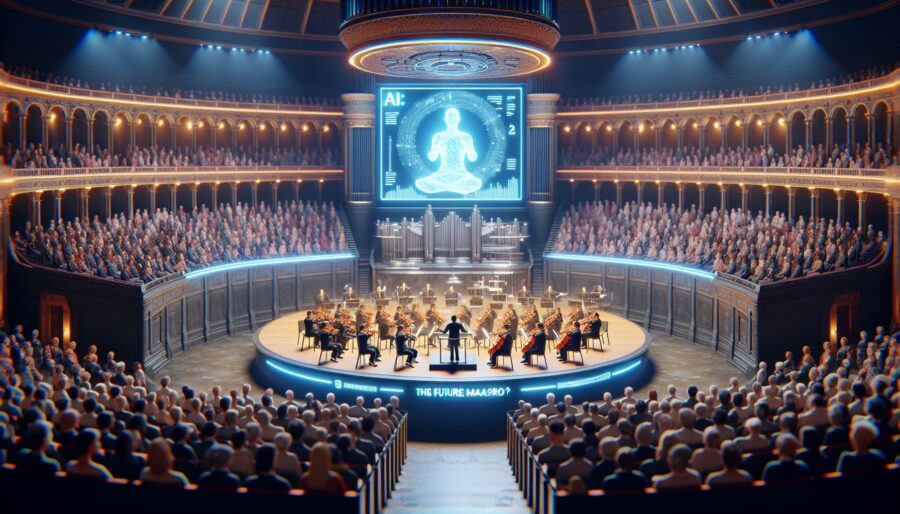
The future is this beautiful mystery full of endless possibilities. If I can make any confident prediction (and by predict, I mean educated guess wrapped in tech optimism), AI isn’t just going to dabble in the arts. It’s going to completely reshape them. Think immersive art experiences in virtual reality, highly personalized soundscapes for your room, and AI as a collaborator in symphonic concerts!

As we keep pushing our technological boundaries, don’t be surprised if in a couple decades, you find a robot in your favorite band or an AI-generated opera breaking all the traditional rules.

A Note to the Future Explorers

Right now, we’re in the early stages of AI’s artistic abilities. We’re basically musical time travelers, watching the birth of a completely new form of expression. So, are we going to grab the best seats, or are we going to jump onstage ourselves? That’s the real question.

I don’t know about you, but I’m all in for this dance between human and machine—a duet that just might hit all the right notes. Stay tuned because we’re just getting started.

And hey, remember, you heard it here first. 🎶

ekrleevhzo

Navigating The Future: Longevity Breakthroughs Sparking a Technological Utopia

Hey fellow futurists! Today, we’re diving headfirst into the tantalizing world of longevity—a sector that’s promising to extend our lifespans while raising a ton of innovation, ethical questions, and honestly, a completely new era of human experience. As modern-day tech monks, we are here to cherish the knowledge, hack the solutions, and hopefully extend our earthly stay beyond the dimly lit average life expectancy.

Unpacking Longevity: More Than Just Anti-Aging

When we talk about longevity, many people first think about anti-aging creams or bizarre wellness rituals. But the real excitement is in a more scientific realm. Longevity, as an emerging tech frontier, combines biochemistry, AI algorithms, and gene editing among other cutting-edge technologies.

What if we could stop, reverse, or greatly diminish the biological aging process? This is the foundational question behind longevity research. It’s like we’re piecing together a biological puzzle that hopefully leads to a fountain of youth—minus the fantasy, plus a heavy dose of science.

The Powerhouse Drives: AI and Big Data

Let’s get geeky for a moment. Artificial Intelligence and Big Data are massive forces driving longevity research to new heights. Imagine data sets so large they make the uncompressed Internet seem like a single floppy disk. We’re talking trillions of data points being crunched to identify patterns, processes, and solutions to aging.

Advanced algorithms analyze everything from genetic sequences to lifestyle factors and therapies, carving the pathways for personalized longevity solutions. AI doesn’t just speed up the research process. It completely changes the game by making predictive models that can test hypotheses at lightning-fast speeds.

CRISPR and Gene Editing: The Cellular Renaissance

Remember when CRISPR was the “new kid” in the lab? Now, it’s becoming a staple tool in our longevity arsenal. Gene editing offers the possibility of eliminating genes associated with age-related diseases or even “switching off” the mechanisms that accelerate aging.

It’s as audacious as rewriting life’s instruction manual. While gene editing comes with serious ethical tension, its potential in extending human healthspan is a fascinating example of science fiction becoming reality.

Longevity Tech Startups: Investing in the Future

Step aside Silicon Valley’s app obsession—a wave of startup innovators is coming for our chromosomes. Companies like Calico Labs (backed by Google parent company Alphabet) and Unity Biotechnology are leading the charge. They’re chasing more than just increased longevity; they’re about enhancing the quality of the extra years.

Have a look at the recent funding trends. Investors aren’t just throwing loose change into longevity startups; this sector is pulling in billions in investment capital. It’s a high-stakes game where the payoff isn’t just dollars—it’s potentially entire new human epochs.

Personalized Medicine: Healthspan Over Lifespan

There’s a movement within the longevity community that argues adding years to our lives should coincide with adding life to our years. This means shifting the focus from lifespan to healthspan. The idea is simple yet profound: extending the period of life during which we are vigorous and disease-free.

Here, technology is key. Wearable tech devices track our every heartbeat, biometric markers, and even happiness levels, feeding data back to us in real-time to keep us on the health track.

Ethical Dimensions: Who Gets to Live Longer?

Picture this: humans with potential life times spanning over a century, but only if they can afford it. That’s a tech-dystopia we don’t want to experience. However, the ethically complex world of longevity technology makes it a possible future.

As appealing as universal longevity might sound, issues of access and inequality need our immediate intellectual attention. Technological solutions must go hand-in-hand with policy frameworks that ensure the benefits are equitably distributed.

Society and Culture: Prepare for Change

Bracing ourselves for the social impact of extended life spans is like adjusting to the shock of discovering another planet. From rethinking retirement to dealing with overpopulation and redefining age-old cultural norms, longevity sets the stage for a societal metamorphosis.

Are we ready to embrace centuries-long learning phases and multi-generational homes? How will we redefine our roles and identities when a hundred isn’t considered “old”? Instead of sticking our heads in societal sand, these questions can ignite profound discussions and solutions.

The Skeptic’s Corner: Is It Realistic?

It’s all too easy to get swept away in a flurry of techno-optimism, so we need to keep skepticism close. Critics argue whether these breakthroughs are over-promised or, worse, create fear of an inevitable biological elitism.

Indeed, there are gaps. Longevity science, though rapidly advancing, remains in its relative infancy. Many proposed solutions have yet to leap from petri dishes to safe and widespread human application. Will we get there? Probably, but like any field pushing radical progress, caution and humility are necessary companions.

The Final Frontier

Longevity isn’t just about living forever—it’s about radically transforming human health and experience. While the thought of dodging the grim reaper indefinitely may be appealing, the real beauty lies in a lengthened, enhanced chapter of human capabilities and happiness.

So, whether you’re a die-hard optimist or a conscientious skeptic, there’s one takeaway: longevity research is a techno-utopian dream with firm roots in reality. As we watch this industry bloom, it’s definitely a thrilling time to be alive. Who knows? Today’s breakthroughs might just mean that we’ll all have the chance to see what the world looks like in another hundred years.

See you on the other side—or rather, a much more extended version of this lifetime! Until next time, keep dreaming big, living well, and embracing the fascinating convergences of tech and life. Cheers!

Page 9 of 9