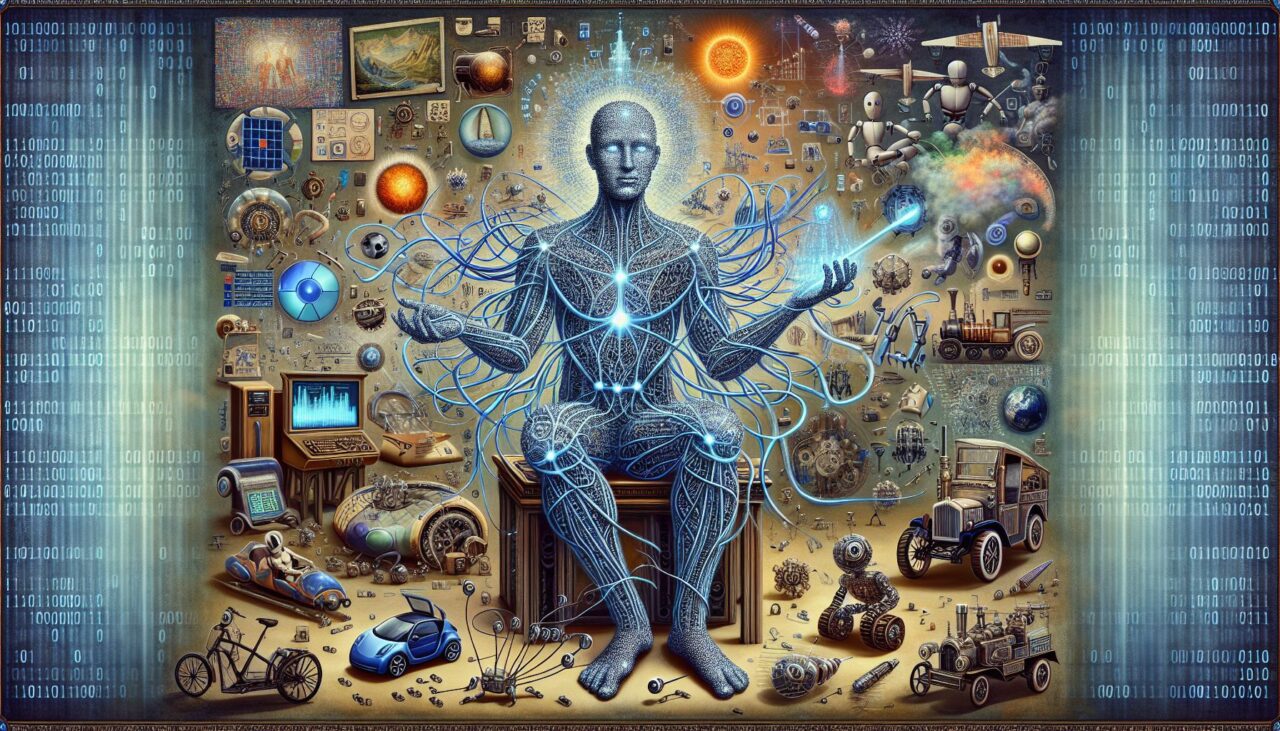
Hey tech enthusiasts, fellow futurists, and anyone looking for a little spark of inspiration from the world of artificial intelligence! Today, I’m diving into one of the most exciting avenues within AI—the role of artificial intelligence in the creative arts. This isn’t about some far-off dystopian future where robots have taken over our easels and microphones, but rather about the genuinely incredible stuff happening right now. Plus, I’ll throw in a few personal insights and maybe a joke or two, because why not keep it light?
A World Where Algorithms Paint Masterpieces
Okay, picture this: a computer program not only analyzing but understanding art. It sounds a bit out there, right? However, companies like DeepArt and OpenAI with their DALL-E project are doing just that. These technologies use deep learning to create visual art from simple text prompts. It’s like giving a computer a canvas and saying, “Go wild!” And let’s be honest, their “wild” is pretty mind-blowing.
Machines with a Vision
Once, I watched a virtual gallery showing pieces generated by AI. Honestly, it felt a bit like conversing with a peculiar but brilliant artist. Each piece had its own vibe. A landscape with Van Gogh-like swirls next to geometric abstractions worthy of Kandinsky. It makes you wonder, are these neural networks channeling old masters or creating something entirely new? More importantly, does it matter? At the end of the day, art should evoke emotion, and if an algorithm achieves this, who am I to scoff?
Music Masters from the Machine World
Now, let’s jump into the world of music. AI-driven music makers like Jukedeck and AIVA (Artificial Intelligence Virtual Artist) are composing tunes that range from hauntingly beautiful to peppy pop beats that’ll have you tapping your feet. Imagine this: a digital companion capable of crafting just the right mood for your next personal video project or even a full-blown film score.
Playing a Supporting Role
Before anyone panics at the thought of AI replacing human musicians, let’s dial it back a bit. The beauty here is in collaboration. As an avid music lover (I may have sung a few too many times in the shower), I’ve dabbled with some AI-driven composition tools. And you know what? They aren’t stealing anything away from human creators. Instead, they’re becoming essential tools that offer new ways to express creativity. These algorithms don’t sleep, don’t tire, and they’re relentless in experimenting. This leaves the human artist to do what they do best: innovate and inspire.
The Written Word in a World of Algorithms
Let’s talk literature. One of the most common fears or maybe fascinations is the idea of AI-generated writings. Could a machine write the next great American novel? The short answer is “not yet,” but there’s more to it than that. Tools like OpenAI’s GPT models (okay, hands up, I’m a bit biased) are already helping with the creation of poetry, short stories, and even full-length books, but with a catch. They work best as co-writers.
A Digital Pen Pal
In my experience, playing with these language tools is like having a sparring partner that throws you sometimes bizarre and often brilliant curveballs. I once tried to write a science fiction short story and used AI to brainstorm plot ideas. While I can’t say I landed on the next “2001: A Space Odyssey,” the AI’s unpredictable nature added a flavor to the narrative I wouldn’t have cooked up alone. It’s all about harnessing the unexpected to find unique pathways in storytelling.
What Does the Future Hold?
Ah, the inevitable question: Will AI become the Picasso of our time? The next Beethoven? Honestly, I’d bet on all of the above, with a twist. I believe AI won’t replace human creativity. Instead, it’ll expand it. By exploring boundaries unattainable through human-only work, AI becomes a tool, an inspiration, and even an artistic collaborator in our creative processes, helping us achieve things we couldn’t do before.
A Harmonious Collaboration
In this optimistic view, the creative arts flourish under the partnership of human ingenuity and machine precision. Sure, there’ll be challenges regarding authorship rights, the value of AI-generated art, and ethical considerations. But those conversations are part of a broader dialogue about the future we want to build. It’s driven by optimism and an openness to transform industries.
To wrap it up, think of AI in the arts as the opening notes of a new symphony, the fresh strokes of a grand mural, the prologue to an epic tale. We’re in an age of artistic renaissance enabled by technology, and it’s going to be one heck of a ride. So let your imagination run wild and see what creations we may bring to life with our buzzing boxy counterparts. Thanks for sticking with me on this exploration. Stay curious and keep creating!